Investment Banking Companies in Sheffield: 28 Active Firms (2026)
Investment banking companies advise on capital raising, mergers and acquisitions, and corporate finance for clients in and around Sheffield.
Mandates tend to sit with owners, finance directors and investor-side deal teams rather than procurement departments. Around Sheffield, the buying centre is usually corporate finance advice for owner-managed businesses, growth-business fundraising, acquisition or disposal support, and valuation work attached to succession or refinancing. Engagements are episodic, confidential and relationship-led: a client may need an adviser for a transaction, then use accountants, lawyers and lenders alongside the same adviser as the deal progresses. Small boutiques sell judgement, process discipline and local market access, with assignments usually handled by partner-level teams rather than layered advisory departments.
Read more
Sheffield has 28 actively trading investment banking and corporate finance advisory firms in this cohort. The employment footprint is small, with total reported headcount of 6 employees. That pairing makes the local market look more like a network of adviser-led boutiques than an institutional banking centre. Mandates are likely to depend on owner relationships, accountant and solicitor referrals, and the availability of buyers or funders across South Yorkshire and nearby UK markets.
Investment banking advisory in Sheffield usually touches regulated-advice boundaries when advisers arrange investments, promote securities or introduce investors, even if much of the day-to-day work is corporate finance, valuation and negotiation. Smaller boutiques therefore tend to separate unregulated transaction support from activities that need formal permissions, and rely on engagement letters, conflict checks and client-classification discipline to keep mandates within scope. Market structure is also shaped by referral channels: accountants, solicitors, lenders and private investors often originate the work, so reputation and execution history matter as much as visible marketing.
Early-commercial weight appears to favour careful specialisation over broad balance-sheet ambition. Firms with a clear route into owner-managed clients, investor networks or sector-specific buyer pools should find it easier to defend fees, while generalist advisers may face pressure from accountants, solicitors and national boutiques moving down-market. Consolidation tends to be relationship-led in this type of market, through succession sales, referral alliances or small-team hires rather than large platform acquisitions. Regulatory boundaries and conflict management will remain practical constraints on how far boutiques can stretch beyond corporate finance advice.
What’s in the file
One row per company, 50+ columns — everything below plus each company’s verified directors, from Companies House filings.
Company data
Verified directors — included
Active director count is the full Companies House board, so it can be higher than the number of names listed — we leave out nominee and formation-agent directors, who aren’t worth contacting. It’s blank for the small number of companies whose officers we haven’t fetched yet.
You’re charged per business, not per row. Where a business trades through several registered companies you get every one, and the Group Primary column marks one row per business — filter to those and the count matches your invoice. Rows sharing a website are not automatically one business: franchises and multi-site operators each count separately, and where names don’t prove a relationship we count them apart rather than guess.
28
Active firms
2026
0
£5M+ firms
by revenue
8
Newer firms
incorporated since 2022
Buy this list of 105 businesses
The complete list in one Excel/CSV file — company details, websites and key data. Yours to download and use.
Key facts
28% of the cohort was incorporated since 2022 (8 firms), so a sizeable share is in its first few filing cycles.
Sheffield investment banking advisers focus on capital raising, mergers and acquisitions, and corporate finance mandates.
Client demand is transaction-led, with buyers seeking help to frame funding options, prepare for sale, or back a negotiated acquisition.
The local segment appears weighted towards boutique, owner-managed advisers and lower-mid-market transaction specialists.
Top Sheffield Investment Banking companies
Financial sub-scores
Computed from 5 filingsProvides corporate finance advisory services including company acquisitions and disposals, mergers and acquisitions support, management buy-outs and buy-ins, fundraising, development capital and…
Serves UK business owners, shareholders and management teams seeking acquisitions, company sales, buy-outs/buy-ins, growth funding, refinancing, valuations or employee ownership transitions.
Financial Health
StrongStrong · Growing, Hiring · 9% CAGR over 4y
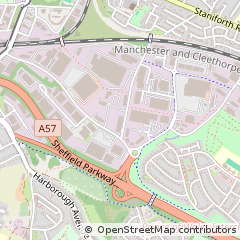
Location
Buy this list of 105 businesses
The complete list in one Excel/CSV file — company details, websites and key data. Yours to download and use.
104 more companies and their verified directors are in the file
You’re seeing the top 1. Buy the list to get all 105 with directors, websites and financials.
How Sheffield Investment Banking companies work and how to sell to them
What they do
Sheffield investment banking boutiques make money by selling transaction advice rather than balance-sheet capital. Revenue usually comes from fixed project fees, monthly retainers, valuation fees and completion-linked success fees tied to fundraising, acquisitions, disposals or refinancing. The service shape is professional advice wrapped around documents and process: financial models, valuation notes, buyer or funder lists, information packs, negotiation support and diligence coordination. Pricing tends to reflect risk and senior time. A small mandate may be paid mostly as fixed-fee advisory work; a sale or capital raise is more likely to include a deferred fee that only lands if the transaction completes.
Who they sell to
Their clients are usually owner-managed companies, family shareholders, growth-business boards, management teams, private investors and acquisitive corporates. The buyer is often a founder, managing director, finance director or investor partner, with solicitors and accountants acting as referrers or informal gatekeepers. Procurement is rarely formal unless a corporate or public-sector counterparty is involved; most work is won through direct relationships, bank introductions, adviser referrals and reputation in a narrow deal community. Sales cycles vary by event. A valuation can move quickly, while a disposal or fundraising mandate may take months of trust-building before an engagement letter is signed.
What they buy
Most investment banking advisers tend to buy tools and services that protect confidentiality, reduce manual production work and keep deal pipelines visible. Common spend areas include client relationship management, secure document exchange, electronic signing, financial modelling, market intelligence, credit checking, email security, identity and access controls, conflict checking and anti-money-laundering support. They may also use outsourced bookkeeping, tax, legal, design and research support around live mandates, although client-facing judgement usually stays with the partners. Recruitment suppliers can be relevant where firms add analysts or origination staff, but headcount appetite is often cautious because fee income depends on transactions completing.
Why and how to sell to them
Pain usually sits in pipeline uncertainty, partner capacity, confidentiality risk and the gap between winning an introduction and converting it into a paid mandate. Sheffield advisers tend to evaluate suppliers when a senior hire arrives, deal flow becomes harder to track, a new regulated-advice boundary is approached, or a live transaction exposes weak document control. Outbound works better when it starts from the economics of small advisory teams: fewer admin hours, cleaner referral follow-up, clearer audit trails and less leakage of sensitive material. Claims about scale or automation need careful framing, because these firms sell discretion and adviser judgement.
How this list is built
Data sources
This list is built from UK Companies House filings, XBRL accounts data, and semantic analysis of each company's public website. Revenue and headcount figures come from the most recent filed accounts; where the company has not filed, values are estimated using a model trained on filed history and peer benchmarks and are labelled as estimates.
Classification
Rather than relying solely on SIC codes, Firmbase classifies each company semantically: the company's website is crawled, an AI model reads what the company actually sells, and the company is placed into the relevant industry and subsectors. SIC codes are used as one signal but not the only one. This means a company that registered under a generic SIC code but pivoted into (for example) fintech is correctly identified as fintech, not as its original SIC category.
Freshness
The underlying company data is refreshed from Companies House continuously; filings appear in the list within days of submission. The curated list ordering is regenerated when the underlying data moves meaningfully (company count changes by more than 5%, a new company enters the top-ranked segment, or the filed-revenue numbers for the top firms change). You can see the last-updated timestamp near the top of the page.
Also in Sheffield
Related directories
Frequently asked questions
How many investment banking companies are there in Sheffield?
What counts as a investment banking company in this list?
Which are the largest investment banking companies in Sheffield?
What do investment banking companies in Sheffield actually do?
How does Sheffield investment banking compare internationally?
How is this list built and how fresh is the data?
How big are the typical investment banking companies in Sheffield?
Are these mostly new or established investment banking companies?
What SIC codes does this use?
What buying signals should I look for?
Buy all 105 businesses as a spreadsheet.
One Excel/CSV file with company details, websites and key data — yours to download and use.