Livestock Companies in Middlesbrough: 32 Active Firms (2026)
Livestock companies rear cattle, sheep, pigs or poultry, produce milk and supply animal products across the Middlesbrough metropolitan area.
Buying centres tend to sit close to farm ownership, local wholesale relationships and processors rather than central procurement teams. Buyers and counterparties are usually regional: abattoirs, dairies, livestock markets, feed and veterinary service providers, and nearby food businesses that need traceable animal products. Engagements are practical and repeat-led, covering supply contracts, herd or flock management services, milk collection, breeding and movement paperwork, with margins shaped by feed, energy and transport costs. In the Middlesbrough area, the target buyer or supplier profile is an established small operator rather than a national processor, so relationship history, welfare compliance and access to local routes to market tend to matter more than formal tendering.
Read more
The Middlesbrough cohort contains 32 actively trading livestock companies, a small metropolitan grouping rather than a broad rural cluster. Reported headcount totals 116 people, pointing to owner-managed farms and related operators with modest payrolls rather than large processing employers. None of the cohort reports turnover above £5M, while 10 have been incorporated since 2022, so the local picture mixes long-running husbandry businesses with a visible newer-company tail. For researchers, Middlesbrough is a compact market to map by supply relationships, animal categories and routes into slaughter, dairy, wholesale or farm-service channels.
Animal-health and welfare requirements shape the operating model more than corporate regulation. Defra and the Animal and Plant Health Agency set the main Great Britain regime for notifiable disease reporting, farm animal welfare concerns, livestock and poultry registration, movement licensing, and import or export controls for animals and animal products. Where animals move into slaughter channels, the Food Standards Agency applies welfare controls in approved slaughterhouses on Defra’s behalf, with official veterinarians monitoring compliance and slaughter staff expected to hold the relevant Certificate of Competence. That structure favours operators with disciplined record-keeping and dependable access to veterinary and transport capacity.
Middlesbrough’s livestock base appears likely to remain relationship-led and relatively local. Newer entrants tend to face the same constraints as longer-running operators: biosecurity duties, welfare expectations, feed and transport exposure, and dependence on nearby slaughter, dairy or wholesale capacity. Scale-up scarcity may persist where land access, labour availability and compliance overheads limit expansion. Consolidation appears more plausible through supply agreements, shared services and succession-driven transfers than through venture-style company formation.
What’s in the file
One row per company, 50+ columns — everything below plus each company’s verified directors, from Companies House filings.
Company data
Verified directors — included
Active director count is the full Companies House board, so it can be higher than the number of names listed — we leave out nominee and formation-agent directors, who aren’t worth contacting. It’s blank for the small number of companies whose officers we haven’t fetched yet.
You’re charged per business, not per row. Where a business trades through several registered companies you get every one, and the Group Primary column marks one row per business — filter to those and the count matches your invoice. Rows sharing a website are not automatically one business: franchises and multi-site operators each count separately, and where names don’t prove a relationship we count them apart rather than guess.
32
Active firms
2026
10
Formed since 2022
Middlesbrough-area firms
£20.1 billion
UK livestock output
63% of agricultural production in 2024
Buy this list of 78 businesses
The complete list in one Excel/CSV file — company details, websites and key data. Yours to download and use.
Key facts
31% of the cohort was incorporated since 2022 (10 firms), so a sizeable share is in its first few filing cycles.
Defra and the Animal and Plant Health Agency cover notifiable disease reporting, farm animal welfare concerns, livestock and poultry registration, non-TB animal movement licensing, and importing/exporting animals and animal products in Great Britain.
The Food Standards Agency enforces slaughterhouse welfare controls in England and Wales, with Official Veterinarians monitoring approved slaughterhouses and slaughter staff required to hold a Certificate of Competence.
In 2024, livestock accounted for 63% of the value of UK agricultural production, worth £20.1 billion; dairy was the largest livestock output at £6.3 billion, followed by beef at £4.1 billion.
Defra’s 2024 farming evidence pack puts UK livestock numbers at 9.4 million cattle, 31 million sheep, 176 million poultry, 4.7 million pigs and a 1.8 million dairy herd.
Eurostat reports that the EU produced 161.8 million tonnes of raw milk in 2024, 0.9 million tonnes more than in 2023, with Germany, France, Poland, the Netherlands and Italy together supplying 65.1% of the EU total.
Top Middlesbrough Livestock companies
Financial sub-scores
Computed from 5 filingsFinancial Health
DistressedDistressed
Location
Buy this list of 78 businesses
The complete list in one Excel/CSV file — company details, websites and key data. Yours to download and use.
Financial sub-scores
Computed from 5 filingsFinancial Health
DistressedDistressed
Location
Buy this list of 78 businesses
The complete list in one Excel/CSV file — company details, websites and key data. Yours to download and use.
Financial sub-scores
Computed from 5 filingsFinancial Health
WeakWeak
Location
Buy this list of 78 businesses
The complete list in one Excel/CSV file — company details, websites and key data. Yours to download and use.
Financial Health
N/AN/A
Location
Buy this list of 78 businesses
The complete list in one Excel/CSV file — company details, websites and key data. Yours to download and use.
Financial sub-scores
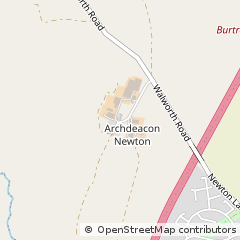
Computed from 3 filingsProduces organic milk and dairy products and delivers them directly to households and businesses. Operates a dairy farm and milk round service supplying milk, cream and related products in returnable…
Serves households in Yorkshire, Durham and Northumberland via doorstep rounds, plus trade and wholesale customers across the North of England needing regular dairy supplies.
Financial Health
StableStable · -7% CAGR over 2y
Location
Buy this list of 78 businesses
The complete list in one Excel/CSV file — company details, websites and key data. Yours to download and use.
Financial sub-scores
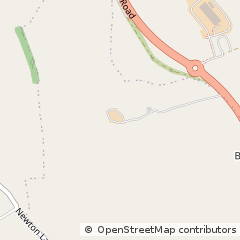
Computed from 5 filingsOperates a livestock auction mart conducting regular sales of cattle, sheep and other farm stock. Organises store and prime livestock auctions, farm dispersal and machinery sales, provides livestock…
Serves livestock farmers, breeders, agricultural vendors and buyers across the North East, North Yorkshire, Northumberland, Cumbria and further afield, with additional customers for farm machinery,…
Financial Health
StableStable · -4% CAGR over 4y
Location
Buy this list of 78 businesses
The complete list in one Excel/CSV file — company details, websites and key data. Yours to download and use.
Financial sub-scores
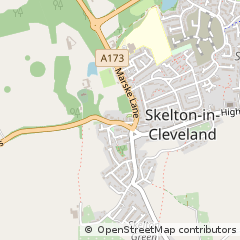
Computed from 5 filingsOperates a mixed farming enterprise producing arable crops and breeding Stabiliser cattle. Sells breeding livestock including bulls, heifers and cows, and manages farmland for crop cultivation and…
Sells to beef cattle farmers and livestock breeders seeking Stabiliser bulls, breeding heifers and cows, including buyers focused on herd fertility, growth and calving ease.
Financial Health
HealthyHealthy · Hiring · 3% CAGR over 4y
Location
Buy this list of 78 businesses
The complete list in one Excel/CSV file — company details, websites and key data. Yours to download and use.
Financial sub-scores
Computed from 4 filingsFinancial Health
DistressedDistressed
Location
Buy this list of 78 businesses
The complete list in one Excel/CSV file — company details, websites and key data. Yours to download and use.
Financial sub-scores
Computed from 5 filingsFinancial Health
StableStable · Hiring · 3% CAGR over 4y
Location
Buy this list of 78 businesses
The complete list in one Excel/CSV file — company details, websites and key data. Yours to download and use.
Financial sub-scores
Computed from 5 filingsFinancial Health
WeakWeak · -4% CAGR over 4y
Location
Buy this list of 78 businesses
The complete list in one Excel/CSV file — company details, websites and key data. Yours to download and use.
Financial sub-scores
Computed from 5 filingsFinancial Health
HealthyHealthy · Hiring · 40% CAGR over 3y
Location
Buy this list of 78 businesses
The complete list in one Excel/CSV file — company details, websites and key data. Yours to download and use.
Financial sub-scores
Computed from 5 filingsFinancial Health
WeakWeak · 0% CAGR over 4y
Location
Buy this list of 78 businesses
The complete list in one Excel/CSV file — company details, websites and key data. Yours to download and use.
Financial sub-scores
Computed from 5 filingsFinancial Health
StrongStrong
Location
Buy this list of 78 businesses
The complete list in one Excel/CSV file — company details, websites and key data. Yours to download and use.
Financial sub-scores
Computed from 2 filingsFinancial Health
DistressedDistressed
Location
Buy this list of 78 businesses
The complete list in one Excel/CSV file — company details, websites and key data. Yours to download and use.
Financial Health
N/AN/A
Location
Buy this list of 78 businesses
The complete list in one Excel/CSV file — company details, websites and key data. Yours to download and use.
Financial sub-scores
Computed from 5 filingsFinancial Health
StableStable · -2% CAGR over 4y
Location
Buy this list of 78 businesses
The complete list in one Excel/CSV file — company details, websites and key data. Yours to download and use.
Financial sub-scores
Computed from 5 filingsFinancial Health
StrongStrong
Location
Buy this list of 78 businesses
The complete list in one Excel/CSV file — company details, websites and key data. Yours to download and use.
Financial sub-scores
Computed from 3 filingsFinancial Health
StableStable · 0% CAGR over 2y
Location
Buy this list of 78 businesses
The complete list in one Excel/CSV file — company details, websites and key data. Yours to download and use.
Financial sub-scores
Computed from 2 filingsFinancial Health
DistressedDistressed
Location
Buy this list of 78 businesses
The complete list in one Excel/CSV file — company details, websites and key data. Yours to download and use.
Financial sub-scores
Computed from 4 filingsFinancial Health
StableStable · 0% CAGR over 3y
Location
Buy this list of 78 businesses
The complete list in one Excel/CSV file — company details, websites and key data. Yours to download and use.
Financial sub-scores
Computed from 4 filingsFinancial Health
DistressedDistressed
Location
Buy this list of 78 businesses
The complete list in one Excel/CSV file — company details, websites and key data. Yours to download and use.
Financial sub-scores
Computed from 3 filingsFinancial Health
WeakWeak · -92% CAGR over 2y
Location
Buy this list of 78 businesses
The complete list in one Excel/CSV file — company details, websites and key data. Yours to download and use.
56 more companies and their verified directors are in the file
You’re seeing the top 22. Buy the list to get all 78 with directors, websites and financials.
How Middlesbrough Livestock companies work and how to sell to them
What they do
Most Middlesbrough livestock businesses earn through the sale of live animals, milk, eggs, meat-ready stock, breeding services or adjacent farm services. Pricing is usually tied to units the buyer understands: per head, liveweight, deadweight, milk volume, collection round, or an agreed seasonal supply arrangement. Revenue can be lumpy where sales depend on market days, slaughter slots or livestock cycles, while dairy and regular service work can give a more predictable cash pattern. The operating model is asset-heavy, with land, housing, feed, vehicles, veterinary input and handling equipment sitting behind what may look like a simple commodity sale.
Who they sell to
Typical buyers are regional processors, abattoirs, dairies, livestock markets, wholesalers, farm shops, butchers and food businesses that need traceable supply. The commercial conversation often happens with an owner, farm manager, livestock buyer, procurement manager, dairy field contact or market agent rather than a central buying team. Spot sales can move quickly when animals are ready and capacity exists; recurring supply or contract-rearing arrangements usually take longer because welfare standards, transport, payment terms and inspection rights need checking. Direct relationships, producer networks and local intermediaries tend to matter more than formal RFP processes.
What they buy
Most livestock firms tend to spend on inputs and services that keep animals moving through regulated supply chains: feed, bedding, veterinary care, medicines, genetics, laboratory testing, transport, insurance and machinery maintenance. Software spend is usually practical rather than experimental, covering accounting, payroll, farm records, herd or flock management, livestock movement documentation, assurance evidence, basic CRM, stock control and scheduling. Larger or more process-heavy operators may also look at traceability, refrigeration monitoring, energy management, cyber security, compliance training and document storage. Professional services tend to cluster around accountancy, tax, legal advice, succession planning, grant support and recruitment for hard-to-fill farm roles.
Why and how to sell to them
Livestock buyers tend to evaluate suppliers when margins are squeezed by feed, energy or haulage costs, when disease-control requirements change, when an audit exposes weak paperwork, or when a new processor, dairy route or slaughter channel changes operational demands. Leadership succession, incorporation, expansion of housing, a shift into direct wholesale supply or a recent compliance issue can also create intent. Outbound works better when it is specific to husbandry, welfare, movement records and local logistics, rather than framed as generic small-business efficiency. Useful angles are fewer missed deadlines, cleaner evidence for inspections, lower admin load and less disruption to animal movements.
How this list is built
Data sources
This list is built from UK Companies House filings, XBRL accounts data, and semantic analysis of each company's public website. Revenue and headcount figures come from the most recent filed accounts; where the company has not filed, values are estimated using a model trained on filed history and peer benchmarks and are labelled as estimates.
Classification
Rather than relying solely on SIC codes, Firmbase classifies each company semantically: the company's website is crawled, an AI model reads what the company actually sells, and the company is placed into the relevant industry and subsectors. SIC codes are used as one signal but not the only one. This means a company that registered under a generic SIC code but pivoted into (for example) fintech is correctly identified as fintech, not as its original SIC category.
Freshness
The underlying company data is refreshed from Companies House continuously; filings appear in the list within days of submission. The curated list ordering is regenerated when the underlying data moves meaningfully (company count changes by more than 5%, a new company enters the top-ranked segment, or the filed-revenue numbers for the top firms change). You can see the last-updated timestamp near the top of the page.
Also in Middlesbrough
Related directories
Frequently asked questions
How many livestock companies are there in Middlesbrough?
What counts as a livestock company in this list?
Which are the largest livestock companies in Middlesbrough?
What do livestock companies in Middlesbrough actually do?
How does Middlesbrough livestock compare internationally?
How is this list built and how fresh is the data?
How big are the typical livestock companies in Middlesbrough?
Are these mostly new or established livestock companies?
What SIC codes does this use?
What buying signals should I look for?
Buy all 78 businesses as a spreadsheet.
One Excel/CSV file with company details, websites and key data — yours to download and use.