Arable Farming Companies in Reading: 33 Active Firms (2026)
Arable farming companies grow cereal, oilseed and other combinable crops for food, feed and processing markets around Reading.
Commercial buying centres tend to sit close to the farm gate: owners, farm managers and crop advisers shape rotations, input spend, machinery scheduling and harvest logistics. Customers are usually grain merchants, mills, feed compounders, processors and neighbouring farms needing contracting capacity, rather than consumers or public-sector buyers. Engagements are seasonal and practical, with sales tied to crop quality, storage, haulage windows and forward commitments. Around Reading, the fit is typically a small Berkshire or Thames Valley operator managing combinable crops as part of a land, machinery and stewardship plan, with compliance and soil condition sitting alongside price as day-to-day constraints.
Read more
Reading has 33 actively trading arable farming companies in scope, a localised cohort rather than a broad regional crop economy. Reported employment totals 37 people, so the visible footprint is mostly farm-principal, family-labour and small-team operation. That headcount profile fits a market where land, machinery, storage and seasonal contracting can matter more than payroll scale. Around Reading, the companies in scope look closer to operating farms and crop-linked entities than to employment-dense agricultural groups.
England’s arable operators sit within a devolved agricultural policy framework in which the Agriculture Act replaced direct payments with financial assistance linked to environmental and productivity objectives, including soil quality, plant health and land management. Pesticide and plant-protection-product use is a discrete compliance area: HSE regulates the UK regime on behalf of the UK government and devolved administrations, only authorised products can be marketed or used, and professional users in Great Britain must register under the Official Controls (Plant Protection Products) Regulations. For Reading farms, regulation is tied to ordinary cropping decisions, not just end-of-year administration.
The local cohort appears weighted towards small operating farms, so change is more likely to come through cropping discipline, machinery sharing, contracting and compliance capability than through a surge of new corporate entrants. Environmental land management tends to favour operators able to evidence soil work, input decisions and plant-health practice, while price exposure keeps attention on storage, timing and buyer relationships. Consolidation may stay patchy: some farms will absorb nearby acreage or contract work, but many Reading-area entities are likely to remain closely held, asset-heavy and seasonal.
What’s in the file
One row per company, 50+ columns — everything below plus each company’s verified directors, from Companies House filings.
Company data
Verified directors — included
Active director count is the full Companies House board, so it can be higher than the number of names listed — we leave out nominee and formation-agent directors, who aren’t worth contacting. It’s blank for the small number of companies whose officers we haven’t fetched yet.
You’re charged per business, not per row. Where a business trades through several registered companies you get every one, and the Group Primary column marks one row per business — filter to those and the count matches your invoice. Rows sharing a website are not automatically one business: franchises and multi-site operators each count separately, and where names don’t prove a relationship we count them apart rather than guess.
33
Active firms
2026
1
Post-2022 firms
incorporated since 2022
0
Firms above £5M
turnover threshold
Buy this list of 75 businesses
The complete list in one Excel/CSV file — company details, websites and key data. Yours to download and use.
Key facts
3% of the cohort was incorporated since 2022 (1 firms), so a sizeable share is in its first few filing cycles.
The Agriculture Act 2020 replaced EU-derived direct payments in England with financial assistance linked to environmental and productivity objectives, including soil quality, plant health and land management.
HSE is the national regulator for pesticide and plant-protection-product use in the UK, and only authorised pesticide products can be marketed or used.
Professional users of plant protection products in Great Britain must register under the Official Controls (Plant Protection Products) Regulations 2020, and HSE may inspect businesses for compliance.
Defra reported total UK cereal production of just over 19.4 million tonnes in 2024, down 12% on 2023, with production value down 22% to around £3.5 billion.
Defra reported production as 79% of total new supply for UK cereal use in 2024, down from 93% in 2023, reflecting greater import reliance after a poor harvest.
Top Reading Arable Farming companies
Financial sub-scores
Computed from 4 filingsFinancial Health
HealthyHealthy · 0% CAGR over 3y
Location
Buy this list of 75 businesses
The complete list in one Excel/CSV file — company details, websites and key data. Yours to download and use.
Financial sub-scores
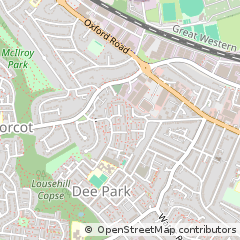
Computed from 4 filingsProvides contract farming services for arable, beef and dairy farms, operating as a farming collective that manages agricultural land, crop production and livestock operations on behalf of farm…
Serves farm owners and agricultural landowners in the south of the UK, particularly arable, beef and dairy farms around Reading seeking contract farming arrangements.
Financial Health
StableStable · 0% CAGR over 3y
Location
Buy this list of 75 businesses
The complete list in one Excel/CSV file — company details, websites and key data. Yours to download and use.
Financial sub-scores
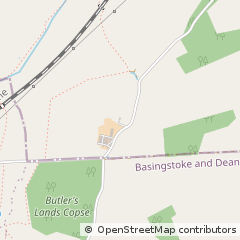
Computed from 5 filingsOperates an agricultural estate focused on arable and grassland farming. Produces crops including winter wheat, spring beans and oats using no‑till and conservation practices, and manages pastureland…
Serves local agricultural customers, explicitly including a local grazier leasing grassland; the website does not identify other crop buyers, industries, or end-customer segments.
Financial Health
StrongStrong
Location
Buy this list of 75 businesses
The complete list in one Excel/CSV file — company details, websites and key data. Yours to download and use.
Financial sub-scores
Computed from 5 filingsFinancial Health
HealthyHealthy · 0% CAGR over 4y
Location

Buy this list of 75 businesses
The complete list in one Excel/CSV file — company details, websites and key data. Yours to download and use.
Financial sub-scores
Computed from 5 filingsFinancial Health
HealthyHealthy · Growing · 0% CAGR over 4y
Location

Buy this list of 75 businesses
The complete list in one Excel/CSV file — company details, websites and key data. Yours to download and use.
Financial sub-scores
Computed from 5 filingsFinancial Health
StableStable · 0% CAGR over 4y
Location
Buy this list of 75 businesses
The complete list in one Excel/CSV file — company details, websites and key data. Yours to download and use.
Financial sub-scores
Computed from 5 filingsFinancial Health
StableStable
Location
Buy this list of 75 businesses
The complete list in one Excel/CSV file — company details, websites and key data. Yours to download and use.
Financial sub-scores
Computed from 5 filingsFinancial Health
DistressedDistressed
Location
Buy this list of 75 businesses
The complete list in one Excel/CSV file — company details, websites and key data. Yours to download and use.
Financial sub-scores
Computed from 4 filingsFinancial Health
StableStable
Location
Buy this list of 75 businesses
The complete list in one Excel/CSV file — company details, websites and key data. Yours to download and use.
Financial sub-scores
Computed from 5 filingsFinancial Health
WeakWeak
Location

Buy this list of 75 businesses
The complete list in one Excel/CSV file — company details, websites and key data. Yours to download and use.
Financial sub-scores
Computed from 3 filingsFinancial Health
WeakWeak · 0% CAGR over 2y
Location

Buy this list of 75 businesses
The complete list in one Excel/CSV file — company details, websites and key data. Yours to download and use.
Financial sub-scores
Computed from 5 filingsFinancial Health
StableStable
Location
Buy this list of 75 businesses
The complete list in one Excel/CSV file — company details, websites and key data. Yours to download and use.
Financial sub-scores
Computed from 5 filingsFinancial Health
StrongStrong · Growing · 0% CAGR over 4y
Location

Buy this list of 75 businesses
The complete list in one Excel/CSV file — company details, websites and key data. Yours to download and use.
Financial sub-scores
Computed from 5 filingsFinancial Health
WeakWeak · Hiring · 19% CAGR over 4y
Location
Buy this list of 75 businesses
The complete list in one Excel/CSV file — company details, websites and key data. Yours to download and use.
Financial sub-scores
Computed from 5 filingsFinancial Health
StrongStrong · Hiring · 32% CAGR over 4y
Location

Buy this list of 75 businesses
The complete list in one Excel/CSV file — company details, websites and key data. Yours to download and use.
Financial sub-scores
Computed from 3 filingsFinancial Health
StrongStrong · Growing · 0% CAGR over 2y
Location
Buy this list of 75 businesses
The complete list in one Excel/CSV file — company details, websites and key data. Yours to download and use.
Financial sub-scores
Computed from 5 filingsFinancial Health
DistressedDistressed · -16% CAGR over 4y
Location

Buy this list of 75 businesses
The complete list in one Excel/CSV file — company details, websites and key data. Yours to download and use.
58 more companies and their verified directors are in the file
You’re seeing the top 17. Buy the list to get all 75 with directors, websites and financials.
How Reading Arable Farming companies work and how to sell to them
What they do
Reading-area arable operators earn most income from selling combinable crops into merchant, milling, feed and processing channels, with additional revenue from contracting, storage, haulage, straw, stewardship and occasional machinery-sharing arrangements. Pricing is usually seasonal: forward crop commitments, spot sales after harvest, quality-adjusted grain terms, and per-hectare or per-job rates for contracting. The offer is physical output and operational capacity rather than a service desk or subscription product. Cash arrives unevenly, so purchases are often judged against crop margin, weather risk, storage space and the chance of reducing downtime at drilling, spraying or harvest.
Who they sell to
Most sell to trade buyers rather than consumers: grain merchants, mills, feed compounders, processors, agricultural contractors, landlords and nearby farms that need crop work or spare storage. Buying authority usually sits with the proprietor, farm manager or estate manager, with agronomists and accountants influencing decisions where input plans, tax, grants or compliance are involved. Contract size is usually crop-lot, field-work or season-based rather than an annual software-style subscription. Procurement is relationship-led and direct, with some formal supply agreements where buyers need assured provenance, moisture standards or regular tonnage.
What they buy
Most arable farming firms tend to spend on inputs, machinery uptime and evidence: seed, fertiliser, crop-protection advice, soil testing, agronomy, fuel, parts, repairs, storage, haulage and grain-quality services. Software purchases are usually practical rather than enterprise-wide, covering farm records, spray logs, crop planning, mapping, finance, payroll, health and safety, document control and compliance evidence for HSE or assurance checks. Professional services often include accountancy, land agency, insurance, environmental scheme support, legal advice on tenancies and recruitment for seasonal labour. Suppliers with local service coverage and clear response times usually have an easier path than remote-only propositions.
Why and how to sell to them
Arable buyers tend to evaluate suppliers when a practical constraint becomes visible: input costs squeeze crop margins, weather compresses the spraying or harvest window, a store needs repair, machinery downtime threatens fieldwork, or an audit raises gaps in records. Leadership changes, acreage changes, new contracting work and environmental scheme applications can also create buying moments. Outbound works better when it is anchored in a specific farm-calendar problem rather than generic growth language. Credible angles include lower cost per hectare, fewer missed field days, clearer compliance evidence, faster local support and cashflow terms that match seasonal receipts.
How this list is built
Data sources
This list is built from UK Companies House filings, XBRL accounts data, and semantic analysis of each company's public website. Revenue and headcount figures come from the most recent filed accounts; where the company has not filed, values are estimated using a model trained on filed history and peer benchmarks and are labelled as estimates.
Classification
Rather than relying solely on SIC codes, Firmbase classifies each company semantically: the company's website is crawled, an AI model reads what the company actually sells, and the company is placed into the relevant industry and subsectors. SIC codes are used as one signal but not the only one. This means a company that registered under a generic SIC code but pivoted into (for example) fintech is correctly identified as fintech, not as its original SIC category.
Freshness
The underlying company data is refreshed from Companies House continuously; filings appear in the list within days of submission. The curated list ordering is regenerated when the underlying data moves meaningfully (company count changes by more than 5%, a new company enters the top-ranked segment, or the filed-revenue numbers for the top firms change). You can see the last-updated timestamp near the top of the page.
Also in Reading
Related directories
Frequently asked questions
How many arable farming companies are there in Reading?
What counts as a arable farming company in this list?
Which are the largest arable farming companies in Reading?
What do arable farming companies in Reading actually do?
How does Reading arable farming compare internationally?
How is this list built and how fresh is the data?
How big are the typical arable farming companies in Reading?
Are these mostly new or established arable farming companies?
What SIC codes does this use?
What buying signals should I look for?
Buy all 75 businesses as a spreadsheet.
One Excel/CSV file with company details, websites and key data — yours to download and use.