Funeral Services Companies in the UK: 22 Active Firms (2026)
Funeral services companies arrange burials, cremations, memorials and bereavement support for families and institutions across the UK.
Buying decisions tend to sit close to the point of need: families, care providers, faith communities, local authorities and institutional administrators looking for a known local operator rather than a distant supplier. Work is case-led and time-sensitive, with funeral arrangers, burial and cremation coordinators, memorial planners and bereavement-support staff forming the main delivery roles. Most engagements are modest, service-led assignments, often won through reputation, referral and local visibility. Multi-branch operators add rota management and supplier coordination, but the commercial centre remains local trust rather than long enterprise procurement.
Read more
Across the UK, 22 funeral-services companies are actively trading in this list, making it a small, local-service cohort rather than a broad national industry sample. The employment footprint is equally compact, with a total reported headcount of 12 across reporting firms. That points to owner-managed or very small-team operators, consistent with a market where availability, proximity and personal handling matter more than procurement machinery. For researchers, the cohort is better read as a set of trading service businesses with local demand exposure than as a proxy for the whole funeral economy.
Market structure is shaped less by a unified buying cycle than by local capacity, family choice, institutional referral routes and faith-specific requirements. Care settings and local authorities can act as recurring sources of demand, but the end customer is often a bereaved household making decisions under time pressure. Burial coordination, cremation coordination and memorial planning also create dependencies on venue availability, documentation, transport and celebrant or faith-community participation. That mix tends to favour operators with clear handover processes, local supplier relationships and staff able to manage sensitive communications.
Further change appears more likely to come through ownership patterns and operating discipline than through sudden demand expansion. The cohort has the feel of a fragmented local-services market, with many businesses remaining small and only a narrow set moving into multi-branch territory. Recent entrants may find referral building and staffing harder than incorporation itself, particularly where families expect personal availability and institutions expect reliable paperwork. Selective consolidation may continue where local brands can be retained, but the sector still tends to reward proximity, discretion and continuity over centralised scale alone.
What’s in the file
One row per company, 50+ columns — everything below plus each company’s verified directors, from Companies House filings.
Company data
Verified directors — included
Active director count is the full Companies House board, so it can be higher than the number of names listed — we leave out nominee and formation-agent directors, who aren’t worth contacting. It’s blank for the small number of companies whose officers we haven’t fetched yet.
You’re charged per business, not per row. Where a business trades through several registered companies you get every one, and the Group Primary column marks one row per business — filter to those and the count matches your invoice. Rows sharing a website are not automatically one business: franchises and multi-site operators each count separately, and where names don’t prove a relationship we count them apart rather than guess.
22
Active firms
2026
1
Over £5M
in revenue
10
Recent incorporations
since 2022
Buy this list of 76 businesses
The complete list in one Excel/CSV file — company details, websites and key data. Yours to download and use.
Key facts
About 4% of the trading cohort reports turnover above £5M (1 of 22 firms) — the rest sits below that revenue band.
45% of the cohort was incorporated since 2022 (10 firms), so a sizeable share is in its first few filing cycles.
Funeral-services providers arrange burials, cremations, memorials and bereavement support for families and institutions across the UK.
Service delivery tends to be local and time-sensitive, with care, logistics and administration sitting alongside the public-facing ceremony work.
Different operating models appear within the segment, including firms that keep more work in-house and firms that rely more on outsourced labour or shared administration.
Top UK Funeral Services companies
Financial sub-scores
Computed from 2 filingsFinancial Health
DistressedDistressed · -33% CAGR over 1y
Location
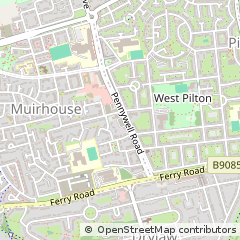
Buy this list of 76 businesses
The complete list in one Excel/CSV file — company details, websites and key data. Yours to download and use.
Financial sub-scores
Computed from 2 filingsFinancial Health
StrongStrong
Location
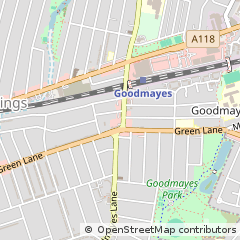
Buy this list of 76 businesses
The complete list in one Excel/CSV file — company details, websites and key data. Yours to download and use.
Financial Health
N/AN/A
Location

Buy this list of 76 businesses
The complete list in one Excel/CSV file — company details, websites and key data. Yours to download and use.
Financial sub-scores
Computed from 2 filingsFinancial Health
HealthyHealthy · 0% CAGR over 1y
Location

Buy this list of 76 businesses
The complete list in one Excel/CSV file — company details, websites and key data. Yours to download and use.
Financial sub-scores
Computed from 4 filingsFinancial Health
WeakWeak · 0% CAGR over 3y
Location
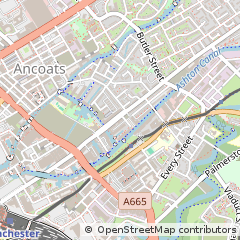
Buy this list of 76 businesses
The complete list in one Excel/CSV file — company details, websites and key data. Yours to download and use.
Financial sub-scores
Computed from 5 filingsFinancial Health
WeakWeak · 0% CAGR over 4y
Location
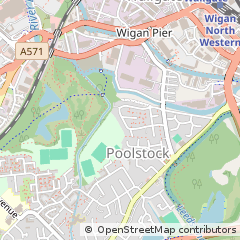
Buy this list of 76 businesses
The complete list in one Excel/CSV file — company details, websites and key data. Yours to download and use.
Financial sub-scores
Computed from 5 filingsFinancial Health
HealthyHealthy · 0% CAGR over 4y
Location
Buy this list of 76 businesses
The complete list in one Excel/CSV file — company details, websites and key data. Yours to download and use.
Financial sub-scores
Computed from 2 filingsFinancial Health
DistressedDistressed
Location
Buy this list of 76 businesses
The complete list in one Excel/CSV file — company details, websites and key data. Yours to download and use.
Financial Health
N/AN/A
Location

Buy this list of 76 businesses
The complete list in one Excel/CSV file — company details, websites and key data. Yours to download and use.
Financial sub-scores
Computed from 2 filingsFinancial Health
StrongStrong
Location
Buy this list of 76 businesses
The complete list in one Excel/CSV file — company details, websites and key data. Yours to download and use.
66 more companies and their verified directors are in the file
You’re seeing the top 10. Buy the list to get all 76 with directors, websites and financials.
How UK Funeral Services companies work and how to sell to them
What they do
Revenue usually comes from case-by-case funeral arranging, with a service fee wrapped around third-party disbursements such as burial, cremation, venue, transport, celebrant, faith-community and memorial costs. Operators tend to quote as fixed packages, bespoke arrangements or itemised estimates, with payment timing shaped by family preference, estate administration and institutional processes. The commercial product is mostly labour, coordination and local access rather than a repeatable digital platform. Larger local groups add branch coverage, rota depth, vehicle scheduling and supplier management, but margins still depend on careful handling of each case, clear family communication and avoiding errors at points where time pressure is high.
Who they sell to
Most buyers are bereaved households, next of kin, executors, care providers, faith communities, local authorities and institutional administrators. Household decisions are usually made by a small family group, with the funeral arranger acting as both adviser and service coordinator. Institutional demand tends to involve care-home managers, local authority officers, faith-community contacts or bereavement administrators who value availability and paperwork discipline. Sales cycles are short where a death has occurred, often moving from enquiry to booking in days rather than through a formal procurement path. Recurring referral relationships take longer to build and are usually won through local visibility, reliability, service tone and evidence that handovers are handled carefully.
What they buy
Funeral-services firms tend to spend on tools and services that reduce administrative mistakes, improve availability and support local lead generation. Relevant categories include case-management software, call handling, rota and scheduling tools, secure document storage, accounting, payment collection, CRM, website management, local search marketing, review management, print production and family-communication systems. Multi-branch operators may also buy HR software, payroll support, training, fleet management, facilities maintenance, security, insurance advice and procurement support for coffins, flowers, transport, memorial products and premises. Many smaller firms are cautious buyers, so propositions that fit existing workflows and do not require large process change are more likely to be considered.
Why and how to sell to them
Commercial intent often appears when funeral-services firms add branches, take on arrangers, change ownership, formalise referral routes or start receiving more local-authority and care-provider work. Pain points are practical: missed calls, out-of-hours cover, incomplete documentation, staff absence, cash tied up in disbursements, supplier coordination and the reputational cost of a mishandled family interaction. Outbound messages tend to land better when they speak to reduced admin, faster case handover, clearer family updates or lower risk in sensitive conversations. Sellers should avoid generic growth language; these buyers usually care more about continuity, discretion and dependable execution than scale for its own sake.
How this list is built
Data sources
This list is built from UK Companies House filings, XBRL accounts data, and semantic analysis of each company's public website. Revenue and headcount figures come from the most recent filed accounts; where the company has not filed, values are estimated using a model trained on filed history and peer benchmarks and are labelled as estimates.
Classification
Rather than relying solely on SIC codes, Firmbase classifies each company semantically: the company's website is crawled, an AI model reads what the company actually sells, and the company is placed into the relevant industry and subsectors. SIC codes are used as one signal but not the only one. This means a company that registered under a generic SIC code but pivoted into (for example) fintech is correctly identified as fintech, not as its original SIC category.
Freshness
The underlying company data is refreshed from Companies House continuously; filings appear in the list within days of submission. The curated list ordering is regenerated when the underlying data moves meaningfully (company count changes by more than 5%, a new company enters the top-ranked segment, or the filed-revenue numbers for the top firms change). You can see the last-updated timestamp near the top of the page.
Related directories
Frequently asked questions
How many funeral services companies are there in the UK?
What counts as a funeral services company in this list?
Which are the largest funeral services companies in the UK?
What do funeral services companies in the UK actually do?
How does UK funeral services compare internationally?
How is this list built and how fresh is the data?
How big are the typical funeral services companies in the UK?
Are these mostly new or established funeral services companies?
What SIC codes does this use?
What buying signals should I look for?
Buy all 76 businesses as a spreadsheet.
One Excel/CSV file with company details, websites and key data — yours to download and use.