Social Housing Companies in Cambridge: 31 Active Firms (2026)
Social housing companies in Cambridge provide and manage affordable homes for tenants across the city and surrounding metropolitan area.
Buying decisions in this niche tend to sit with housing operations, tenancy-support leads, board trustees and small finance teams, not with consumer lettings or housebuilding sales functions. Engagements are long-running and operational: rent administration, repairs coordination, safeguarding referrals, resident communication and maintenance procurement matter more than one-off property transactions. Cambridge-area providers typically work with local tenants, partner agencies and public-sector housing teams through recurring service agreements, community-led tenancy management and case-by-case support, so suppliers usually meet lean organisations with limited back-office capacity and a practical bias towards keeping homes occupied and compliant.
Read more
Cambridge has 31 actively trading social housing companies, a compact local cohort skewed towards small landlords, housing associations and resident-service operators rather than high-turnover property groups. Reported headcount totals 16 employees among organisations with staffing disclosures, which points to very lean operating models and a reliance on outsourced trades, partner agencies or volunteer governance in many cases. The commercial profile therefore sits closer to neighbourhood housing management than to mixed-tenure development, with local service delivery carrying more weight than balance-sheet scale.
Market structure is closer to regulated service provision than to speculative property trading. Providers have to keep allocation criteria, rent administration, repair duties, complaint handling and tenancy records aligned with public-purpose housing expectations, even when the organisation itself is small. Cambridge-area operators also sit between tenants, councils, maintenance contractors and community support partners, so weak record-keeping can create operational risk without any change in housing demand. The compliance burden is therefore practical as well as legal: evidence of safe homes, traceable decisions and timely resident communication tends to matter more than sales reach.
The cohort appears likely to remain fragmented, with most activity held by small community landlords and support bodies rather than revenue-scale property platforms. New demand may not translate neatly into larger providers, because affordable-housing operations depend on funding routes, property availability, repair capacity and local referral relationships. More formal governance and tenant-communication requirements could favour operators that can document decisions and coordinate maintenance cleanly. Even so, scale-up scarcity should be expected: for many Cambridge providers, the operating model is intentionally local, service-led and constrained by the homes they can access rather than by addressable-market ambition.
What’s in the file
One row per company, 50+ columns — everything below plus each company’s verified directors, from Companies House filings.
Company data
Verified directors — included
Active director count is the full Companies House board, so it can be higher than the number of names listed — we leave out nominee and formation-agent directors, who aren’t worth contacting. It’s blank for the small number of companies whose officers we haven’t fetched yet.
You’re charged per business, not per row. Where a business trades through several registered companies you get every one, and the Group Primary column marks one row per business — filter to those and the count matches your invoice. Rows sharing a website are not automatically one business: franchises and multi-site operators each count separately, and where names don’t prove a relationship we count them apart rather than guess.
31
Active firms
2026
12
New incorporations
since 2022
0
£5M-plus firms
by revenue
Buy this list of 92 businesses
The complete list in one Excel/CSV file — company details, websites and key data. Yours to download and use.
Key facts
38% of the cohort was incorporated since 2022 (12 firms), so a sizeable share is in its first few filing cycles.
Cambridge’s social housing firms provide and manage affordable homes across the city and surrounding metropolitan area.
Tenant services, repairs and rent collection sit close to the operating model, rather than being incidental property-administration tasks.
The local mix appears to include landlords, management vehicles and service entities rather than national housing groups.
Administrative models vary, with asset-holding entities sitting alongside operators that handle tenant and property-management work directly.
Top Cambridge Social Housing companies
Financial sub-scores
Computed from 2 filingsFinancial Health
DistressedDistressed · 0% CAGR over 1y
Location
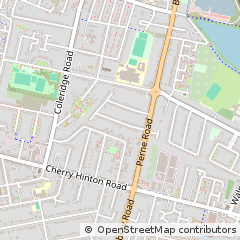
Buy this list of 92 businesses
The complete list in one Excel/CSV file — company details, websites and key data. Yours to download and use.
Financial sub-scores
Computed from 3 filingsFinancial Health
DistressedDistressed
Location
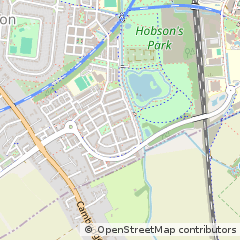
Buy this list of 92 businesses
The complete list in one Excel/CSV file — company details, websites and key data. Yours to download and use.
Financial Health
N/AN/A
Location
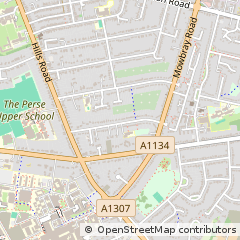
Buy this list of 92 businesses
The complete list in one Excel/CSV file — company details, websites and key data. Yours to download and use.
Financial sub-scores
Computed from 5 filingsFinancial Health
StrongStrong · 0% CAGR over 3y
Location
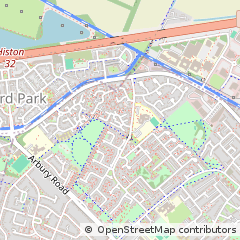
Buy this list of 92 businesses
The complete list in one Excel/CSV file — company details, websites and key data. Yours to download and use.
Financial Health
N/AN/A
Location
Buy this list of 92 businesses
The complete list in one Excel/CSV file — company details, websites and key data. Yours to download and use.
Financial sub-scores
Computed from 3 filingsFinancial Health
StableStable
Location
Buy this list of 92 businesses
The complete list in one Excel/CSV file — company details, websites and key data. Yours to download and use.
Financial sub-scores
Computed from 5 filingsFinancial Health
WeakWeak · 0% CAGR over 4y
Location
Buy this list of 92 businesses
The complete list in one Excel/CSV file — company details, websites and key data. Yours to download and use.
Financial sub-scores
Computed from 2 filingsFinancial Health
StrongStrong
Location
Buy this list of 92 businesses
The complete list in one Excel/CSV file — company details, websites and key data. Yours to download and use.
Financial sub-scores
Computed from 3 filingsFinancial Health
StrongStrong · Growing · 0% CAGR over 2y
Location
Buy this list of 92 businesses
The complete list in one Excel/CSV file — company details, websites and key data. Yours to download and use.
Financial sub-scores
Computed from 5 filingsFinancial Health
StableStable
Location
Buy this list of 92 businesses
The complete list in one Excel/CSV file — company details, websites and key data. Yours to download and use.
Financial sub-scores
Computed from 4 filingsFinancial Health
DistressedDistressed · 0% CAGR over 3y
Location
Buy this list of 92 businesses
The complete list in one Excel/CSV file — company details, websites and key data. Yours to download and use.
Financial sub-scores
Computed from 2 filingsFinancial Health
StrongStrong
Location
Buy this list of 92 businesses
The complete list in one Excel/CSV file — company details, websites and key data. Yours to download and use.
Financial sub-scores
Computed from 5 filingsFinancial Health
WeakWeak · -60% CAGR over 5y
Location
Buy this list of 92 businesses
The complete list in one Excel/CSV file — company details, websites and key data. Yours to download and use.
Financial sub-scores
Computed from 2 filingsFinancial Health
DistressedDistressed · 0% CAGR over 1y
Location
Buy this list of 92 businesses
The complete list in one Excel/CSV file — company details, websites and key data. Yours to download and use.
Financial sub-scores
Computed from 3 filingsFinancial Health
StrongStrong
Location
Buy this list of 92 businesses
The complete list in one Excel/CSV file — company details, websites and key data. Yours to download and use.
Financial sub-scores
Computed from 5 filingsFinancial Health
DistressedDistressed · -68% CAGR over 4y
Location
Buy this list of 92 businesses
The complete list in one Excel/CSV file — company details, websites and key data. Yours to download and use.
76 more companies and their verified directors are in the file
You’re seeing the top 16. Buy the list to get all 92 with directors, websites and financials.
How Cambridge Social Housing companies work and how to sell to them
What they do
Cambridge social housing providers usually earn income through social rent, service charges, housing-management fees, grants and contracted support rather than product sales. Their service is a bundle of homes, tenancy administration, repairs coordination, resident contact and compliance evidence, with revenue tied to occupied units, funding agreements or local authority referrals. Supplier engagement sizes tend to be modest because no Cambridge-area firm in this cohort reports turnover above £5M, so pricing that scales by property count, user seat or case volume usually fits better than large upfront licences. They also buy services that reduce manual administration without forcing a wholesale operating-model change.
Who they sell to
Most do not sell in the private-sector sense; they allocate or manage homes for eligible tenants, often alongside councils, support agencies, charities and community partners. Where there is a commercial counterparty, it is typically a local authority housing team, commissioning officer, finance lead, trustees, or another landlord outsourcing tenancy or property-management activity. Procurement tends to be relationship-led for small services and more formal when public funding or repairs frameworks are involved. Sales cycles are therefore uneven: a minor service can be agreed through a manager and board approval, while funded contracts and partnership arrangements may take months and require evidence of governance, safeguarding and financial control.
What they buy
Most Cambridge social housing organisations tend to spend on tools and services that keep rent, repairs and resident contact traceable. Common categories include housing-management software, case-management systems, finance and accounting tools, document storage, arrears workflows, contractor scheduling, asset registers, complaints handling, telephony, messaging and cyber security. They also buy external audit, payroll, legal advice, policy support, insurance, recruitment, building surveying, planned-maintenance services and specialist resident support. Cloud hosting and outsourced IT can appeal where staff numbers are low, but buyers usually need simple migration, clear training and predictable running costs rather than a broad enterprise platform.
Why and how to sell to them
Buying intent usually appears when a practical risk becomes visible: arrears are harder to track, repairs are missed, complaint evidence is scattered, a trustee board asks for better reporting, or a council partner tightens expectations. Newer providers, including 12 incorporated since 2022, may be formalising policies and back-office processes while still relying on small teams. Outbound angles tend to land when they connect to a named operational problem, such as reducing manual handovers between tenancy support and maintenance, evidencing response times, or making resident communication auditable. Price sensitivity is likely, so shorter pilots, property-count pricing and implementation support are easier to defend.
How this list is built
Data sources
This list is built from UK Companies House filings, XBRL accounts data, and semantic analysis of each company's public website. Revenue and headcount figures come from the most recent filed accounts; where the company has not filed, values are estimated using a model trained on filed history and peer benchmarks and are labelled as estimates.
Classification
Rather than relying solely on SIC codes, Firmbase classifies each company semantically: the company's website is crawled, an AI model reads what the company actually sells, and the company is placed into the relevant industry and subsectors. SIC codes are used as one signal but not the only one. This means a company that registered under a generic SIC code but pivoted into (for example) fintech is correctly identified as fintech, not as its original SIC category.
Freshness
The underlying company data is refreshed from Companies House continuously; filings appear in the list within days of submission. The curated list ordering is regenerated when the underlying data moves meaningfully (company count changes by more than 5%, a new company enters the top-ranked segment, or the filed-revenue numbers for the top firms change). You can see the last-updated timestamp near the top of the page.
Also in Cambridge
Related directories
Frequently asked questions
How many social housing companies are there in Cambridge?
What counts as a social housing company in this list?
Which are the largest social housing companies in Cambridge?
What do social housing companies in Cambridge actually do?
How does Cambridge social housing compare internationally?
How is this list built and how fresh is the data?
How big are the typical social housing companies in Cambridge?
Are these mostly new or established social housing companies?
What SIC codes does this use?
What buying signals should I look for?
Buy all 92 businesses as a spreadsheet.
One Excel/CSV file with company details, websites and key data — yours to download and use.