Academy Trust Companies in Stoke-on-Trent: 48 Active Firms (2026)
Academy trust companies run state-funded schools and shared education services across Stoke-on-Trent and its surrounding metropolitan area.
Buying centres sit mainly with trust boards, chief finance officers, school business managers and central operations teams rather than with classroom-level purchasers. Provision tends to be organised around governance, finance, HR, estates, safeguarding administration and school improvement, with suppliers and partners usually selling into a public-sector procurement culture. Single-school trusts and small multi-academy groups often look for practical support that reduces central-team workload, while larger trusts need repeatable processes across several sites. Engagements are usually contract-led, budget-cycle sensitive and tied to measurable school operations rather than speculative platform adoption.
Read more
Stoke-on-Trent has 48 academy trust companies in active trading, a narrow local cohort rather than a broad supplier universe. Reported company-level headcount totals 49, which points to a structure where many entities retain compact central functions even when their operating role is pupil-facing. The market is therefore less about high-volume new formation and more about governance consolidation, school-business administration and the movement of services between individual schools and trust-level teams across Stoke-on-Trent and nearby Staffordshire communities.
Public funding makes academy trusts less like discretionary software buyers and more like service operators with annual budgets, delegated authority and board oversight. Governance, finance, HR and estates functions are often centralised, but school-level needs remain visible because these entities run pupil-facing operations rather than dormant holdings. For researchers, the useful distinction is between trusts that merely hold a school company structure and trusts with active shared services, procurement responsibility and recurring operational spend. Counterparties tend to face slow approval cycles, documented policies and a preference for continuity over frequent supplier switching.
Future movement appears likely to come from consolidation of school operations and service functions rather than from conventional start-up expansion. Newer entities tend to be governance vehicles or local reorganisations, while mature trusts face pressure to standardise finance, HR, estates and compliance work without losing school-level accountability. Scale remains scarce, so supplier strategies that assume enterprise-style buying may miss much of the addressable market. The more plausible pattern is cautious centralisation: shared services broaden inside trusts, procurement becomes more formal, and smaller entities either stay local or align more closely with neighbouring education groups.
What’s in the file
One row per company, 50+ columns — everything below plus each company’s verified directors, from Companies House filings.
Company data
Verified directors — included
Active director count is the full Companies House board, so it can be higher than the number of names listed — we leave out nominee and formation-agent directors, who aren’t worth contacting. It’s blank for the small number of companies whose officers we haven’t fetched yet.
You’re charged per business, not per row. Where a business trades through several registered companies you get every one, and the Group Primary column marks one row per business — filter to those and the count matches your invoice. Rows sharing a website are not automatically one business: franchises and multi-site operators each count separately, and where names don’t prove a relationship we count them apart rather than guess.
48
Active firms
2026
2
Above £5M
Revenue threshold
8
Since 2022
Recent incorporations
Buy this list of 132 businesses
The complete list in one Excel/CSV file — company details, websites and key data. Yours to download and use.
Key facts
About 4% of the trading cohort reports turnover above £5M (2 of 48 firms) — the rest sits below that revenue band.
16% of the cohort was incorporated since 2022 (8 firms), so a sizeable share is in its first few filing cycles.
Academy trusts run state-funded schools through company-level governance rather than standalone local-authority school structures.
Buying centres tend to sit around school management, central services and shared administration rather than purely commercial education products.
Multi-academy trust structures can create group-level procurement for staffing, estates, finance and education services across multiple schools.
Company-level reporting makes trusts visible counterparties for suppliers assessing local education-sector demand.
Top Stoke-on-Trent Academy Trust companies
Financial sub-scores
Computed from 5 filingsFinancial Health
HealthyHealthy
Location

Buy this list of 132 businesses
The complete list in one Excel/CSV file — company details, websites and key data. Yours to download and use.
Financial sub-scores
Computed from 5 filingsFinancial Health
WeakWeak · 0% CAGR over 4y
Location

Buy this list of 132 businesses
The complete list in one Excel/CSV file — company details, websites and key data. Yours to download and use.
Financial sub-scores
Computed from 3 filingsFinancial Health
HealthyHealthy
Location

Buy this list of 132 businesses
The complete list in one Excel/CSV file — company details, websites and key data. Yours to download and use.
Financial sub-scores
Computed from 3 filingsFinancial Health
StrongStrong · Growing, Hiring · 29% CAGR over 2y
Location

Buy this list of 132 businesses
The complete list in one Excel/CSV file — company details, websites and key data. Yours to download and use.
Financial sub-scores
Computed from 5 filingsFinancial Health
StableStable · -68% CAGR over 4y
Location

Buy this list of 132 businesses
The complete list in one Excel/CSV file — company details, websites and key data. Yours to download and use.
Financial sub-scores
Computed from 5 filingsFinancial Health
StableStable · -68% CAGR over 4y
Location
Buy this list of 132 businesses
The complete list in one Excel/CSV file — company details, websites and key data. Yours to download and use.
Financial sub-scores
Computed from 5 filingsFinancial Health
HealthyHealthy · 0% CAGR over 4y
Location
Buy this list of 132 businesses
The complete list in one Excel/CSV file — company details, websites and key data. Yours to download and use.
Financial sub-scores
Computed from 5 filingsFinancial Health
WeakWeak · 0% CAGR over 4y
Location
Buy this list of 132 businesses
The complete list in one Excel/CSV file — company details, websites and key data. Yours to download and use.
Financial sub-scores
Computed from 5 filingsFinancial Health
StableStable · -64% CAGR over 4y
Location

Buy this list of 132 businesses
The complete list in one Excel/CSV file — company details, websites and key data. Yours to download and use.
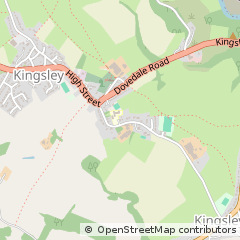
Operates a multi‑academy trust of primary schools, providing primary education for children and coordinating teaching, curriculum delivery, staff collaboration, and extracurricular activities across…
Serves primary-aged children and their families across small rural Church of England and community primary schools, alongside local education stakeholders within its multi-academy trust.
Location
Buy this list of 132 businesses
The complete list in one Excel/CSV file — company details, websites and key data. Yours to download and use.
Operates a Church of England primary academy providing primary education, delivering the national curriculum, pastoral care, and extracurricular activities. Manages admissions, safeguarding, special…
Serves school-age pupils and their parents/carers, including SEND and pupil premium cohorts, prospective intake families, and local community groups seeking room hire.
Location

Buy this list of 132 businesses
The complete list in one Excel/CSV file — company details, websites and key data. Yours to download and use.
Financial sub-scores
Computed from 5 filingsFinancial Health
StableStable
Location
Buy this list of 132 businesses
The complete list in one Excel/CSV file — company details, websites and key data. Yours to download and use.
Financial sub-scores
Computed from 5 filingsFinancial Health
HealthyHealthy
Location

Buy this list of 132 businesses
The complete list in one Excel/CSV file — company details, websites and key data. Yours to download and use.
Financial sub-scores
Computed from 5 filingsFinancial Health
WeakWeak
Location

Buy this list of 132 businesses
The complete list in one Excel/CSV file — company details, websites and key data. Yours to download and use.
Financial sub-scores
Computed from 5 filingsFinancial Health
StableStable
Location

Buy this list of 132 businesses
The complete list in one Excel/CSV file — company details, websites and key data. Yours to download and use.
Financial sub-scores
Computed from 5 filingsFinancial Health
StableStable · 0% CAGR over 5y
Location
Buy this list of 132 businesses
The complete list in one Excel/CSV file — company details, websites and key data. Yours to download and use.
Financial sub-scores
Computed from 5 filingsFinancial Health
WeakWeak · 0% CAGR over 4y
Location
Buy this list of 132 businesses
The complete list in one Excel/CSV file — company details, websites and key data. Yours to download and use.
Financial sub-scores
Computed from 5 filingsFinancial Health
StrongStrong · Growing · 0% CAGR over 4y
Location

Buy this list of 132 businesses
The complete list in one Excel/CSV file — company details, websites and key data. Yours to download and use.
114 more companies and their verified directors are in the file
You’re seeing the top 18. Buy the list to get all 132 with directors, websites and financials.
How Stoke-on-Trent Academy Trust companies work and how to sell to them
What they do
Academy trusts are service operators rather than conventional commercial sellers. Income tends to come through state-funded school provision, with spending then allocated across central administration, school operations and local site needs. Supplier engagements usually take the form of annual or multi-year contracts for software, outsourced services, facilities support or advisory work. Pricing is commonly per school, per pupil, per employee, per module or fixed-fee for a defined service. Smaller trusts often value hands-on delivery because internal capacity is limited; larger groups are more likely to ask whether a system or service can be applied consistently across several schools.
Who they sell to
The end service is education for pupils and families, but commercial decisions sit with trust-level and school-level managers. Most suppliers will encounter chief finance officers, school business managers, trust boards and central operations teams, with headteachers often influencing requirements where classroom or site operations are affected. Contract values are typically constrained by public budgets, so approval can be slower than in private-sector SMB sales. Direct approaches may work for low-risk services, while larger or recurring commitments tend to move through documented procurement, comparison exercises and board scrutiny. Timing matters: budget planning, renewal windows and school-year disruption all affect when buyers will engage.
What they buy
Most academy trusts tend to spend on systems and services that reduce administrative load, evidence compliance or keep school sites running. Relevant categories include finance and budgeting software, payroll and HR support, governance administration, safeguarding workflows, audit and accounting services, recruitment, staff training, estates maintenance, health and safety support, IT services, cybersecurity, connectivity and data reporting. School improvement and operational consultancy can also fit where a trust is centralising processes or absorbing new responsibilities. Purchases are rarely speculative; buyers usually need a clear link to workload reduction, risk control, pupil-facing operations or cost certainty across one or more schools.
Why and how to sell to them
Academy trust buyers tend to evaluate suppliers when central teams are stretched, a renewal is approaching, a trust changes leadership, a school joins the group, or finance and governance processes need tightening. The better outbound angle is usually practical rather than visionary: fewer manual tasks, clearer audit trails, predictable costs, easier reporting to boards and less disruption for school staff. Evidence from comparable education settings helps, as does pricing that maps cleanly to school, employee or service-unit counts. Long nurture cycles are common, so concise problem diagnosis and well-timed follow-up around budgeting or contract review periods matter more than volume-led messaging.
How this list is built
Data sources
This list is built from UK Companies House filings, XBRL accounts data, and semantic analysis of each company's public website. Revenue and headcount figures come from the most recent filed accounts; where the company has not filed, values are estimated using a model trained on filed history and peer benchmarks and are labelled as estimates.
Classification
Rather than relying solely on SIC codes, Firmbase classifies each company semantically: the company's website is crawled, an AI model reads what the company actually sells, and the company is placed into the relevant industry and subsectors. SIC codes are used as one signal but not the only one. This means a company that registered under a generic SIC code but pivoted into (for example) fintech is correctly identified as fintech, not as its original SIC category.
Freshness
The underlying company data is refreshed from Companies House continuously; filings appear in the list within days of submission. The curated list ordering is regenerated when the underlying data moves meaningfully (company count changes by more than 5%, a new company enters the top-ranked segment, or the filed-revenue numbers for the top firms change). You can see the last-updated timestamp near the top of the page.
Also in Stoke-on-Trent
Related directories
Frequently asked questions
How many academy trust companies are there in Stoke-on-Trent?
What counts as a academy trust company in this list?
Which are the largest academy trust companies in Stoke-on-Trent?
What do academy trust companies in Stoke-on-Trent actually do?
How does Stoke-on-Trent academy trust compare internationally?
How is this list built and how fresh is the data?
How big are the typical academy trust companies in Stoke-on-Trent?
Are these mostly new or established academy trust companies?
What SIC codes does this use?
What buying signals should I look for?
Buy all 132 businesses as a spreadsheet.
One Excel/CSV file with company details, websites and key data — yours to download and use.